01. CHATEAU DE CHAMBORD
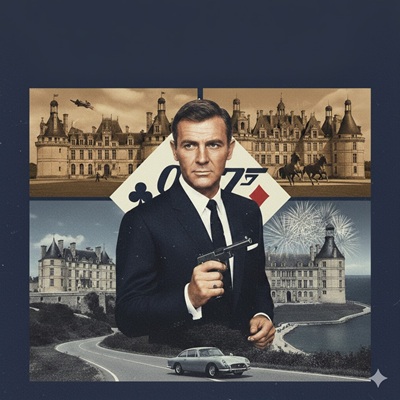
Built in the heart of the largest enclosed forest park in Europe (approximately 50 km² surrounded by a 32 km long wall), it is the largest of the Loire Valley châteaux. It boasts a formal garden and a hunting park, both listed as historical monuments. Chambord is the only royal estate that remains intact since its creation.
02. CHATEAU DE MAINTENON
Nestled in the heart of a verdant valley, the Château de Maintenon is a masterpiece of balance, famous for having been the home of Françoise d’Aubigné, the future Marquise de Maintenon and secret wife of Louis XIV. This monument immediately captivates with its refined architecture, blending medieval towers and Renaissance façades, all surrounded by a water-filled moat. The highlight lies in its formal French gardens, designed by Le Nôtre, which offer a spectacular view of the ruins of Vauban's aqueduct. This colossal structure, built to supply water to Versailles, lends the site a romantic and unique atmosphere, unlike any other in France. Film buffs will also be delighted: this theatrical setting has served as the backdrop for numerous film shoots. Those with a touch of nostalgia will remember Jean-Paul Belmondo performing his famous stunts for the film *Le Professionnel* at the foot of these majestic arches. Between its richly furnished apartments, flowerbeds and royal heritage, Maintenon is an essential stop for anyone wishing to discover the French art of living, just an hour from Paris.
03. CHATEAU DE VAUX-LE-VICOMTE
04. CHATEAU CHENONCEAU
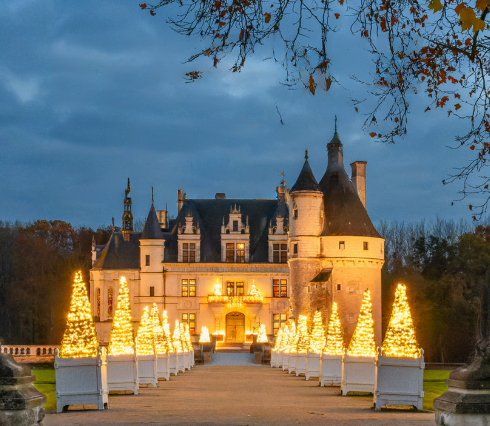
Chenonceau, with its famous two-story gallery overlooking the Cher River, is one of the jewels of Loire Valley architecture. Its Italian influences and French characteristics are clearly visible. Of the original building, only the Tour des Marques remains today, a vestige of the medieval castle that borders the Cher. Chenonceau was built, furnished, and transformed by women of very different temperaments. It was built by Katherine Briaçonnet in 1513, enriched by Diane de Poitiers, and enlarged under Catherine de Medici. It became a place of retreat under the White Queen Louise of Lorraine, then it was saved by Louise Dupin during the French Revolution, and finally, transformed by Madame Pelouze. Due to the large number of women who have been in charge of it, it is nicknamed "the Ladies' Castle." The private estate of Chenonceau has belonged to the Menier family since 1913 and is open to the public. The castle has been listed as a historical monument since its initial inscription on the list in 1840, and the park by decree dated November 7, 1962. The building and its surroundings have been part of the Loire Valley, a UNESCO World Heritage Site, since July 9, 2017.
05. CHATEAU DE PIERREFONDS
The Medieval Ideal Reinvented Rising from dense forests like a mirage, the Château de Pierrefonds offers the purest and most imposing image of a medieval fortress. Yet, this stone colossus is the product of a unique architectural adventure: left in ruins by history, it was entirely rebuilt in the 19th century by the audacious Viollet-le-Duc under the impetus of Napoleon III. More than a simple restoration, it is a masterful interpretation of medieval architecture, blending defensive realism with decorative fantasy. With its eight massive towers, crenellated curtain walls, and incredible defensive system, the exterior impresses with its power. Inside, visitors discover a magical world: the Hall of Heroines, an immense gallery with painted and sculpted decorations, testifies to the imperial luxury and chivalric ideals of the era. This dreamlike setting, a blend of historical reality and theatrical scenery, has naturally captivated the world of film and television (notably for the Merlin series). A visit to Pierrefonds is a fascinating journey into the land of legends, knights, and French architectural genius.