01. PALAIS IDEAL DE FERDINAND CHEVAL
April 1879. Ferdinand Cheval, a 43-year-old rural postman, stumbled upon such a strange stone during his rounds that it awakened a dream. A true self-taught man, he would dedicate 33 years of his life to single-handedly building a dream palace in his vegetable garden, inspired by nature, postcards, and the first illustrated magazines he delivered. Traveling some thirty kilometers each day on his rounds through the countryside, he would collect stones, aided by his faithful wheelbarrow. Alone and misunderstood, he inscribed on his monument "the work of one man." His dream palace was completed in 1912. The Ideal Palace of Postman Cheval: In the heart of a lush garden, he imagined an uninhabitable palace, populated by an incredible menagerie—octopus, doe, caiman, elephant, pelican, bear, birds… But also giants, fairies, mythological figures, waterfalls, and architectural styles from every continent. An architectural masterpiece as unclassifiable as it is universal. Unique in the world, the Ideal Palace has inspired artists for over a century. Independent of any artistic movement, built without any architectural rules, the Ideal Palace was admired by the Surrealists and recognized as a work of outsider art. In 1969, it was classified as a Historical Monument by André Malraux, then Minister of Culture, under the category of Naïve Art.
02. CHATEAU DE BREZE
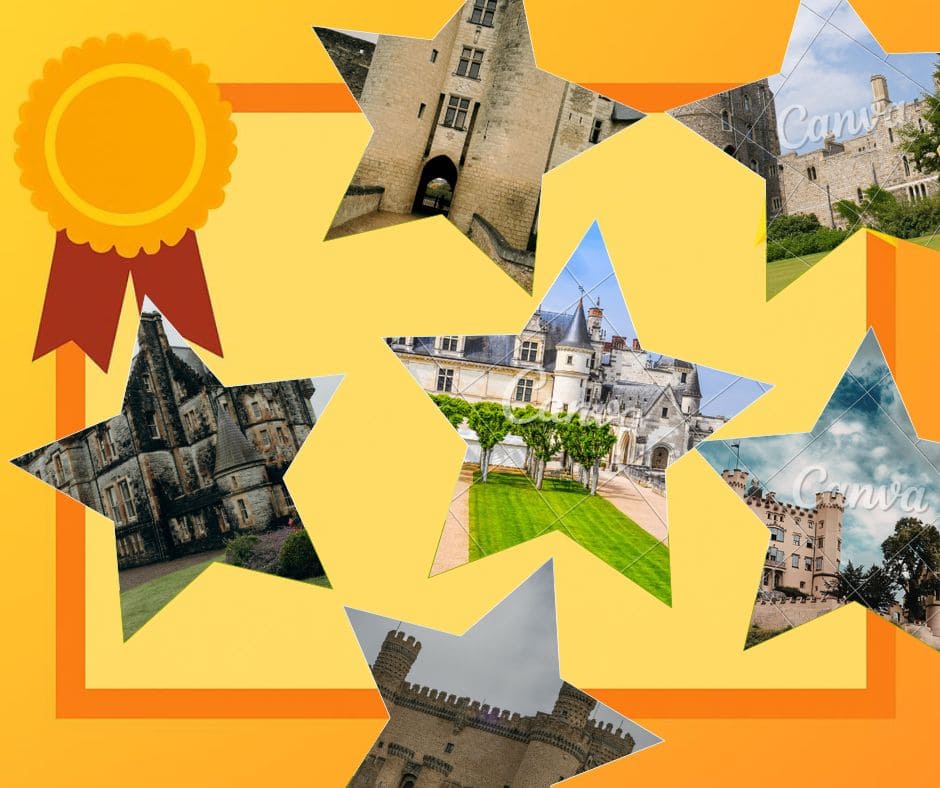
Located a short distance from Saumur, the Château de Brézé offers a monumental experience unlike any other in the world: that of a "castle beneath a castle." While its exterior presents the elegance of a Renaissance residence remodeled in the 19th century in a flamboyant Neo-Gothic style, its true secret lies beneath its foundations. There, one discovers the largest troglodytic seigneurial complex in Europe, a labyrinth carved into the tufa rock that served as an impregnable refuge and a self-sufficient center of life during times of conflict. Descending into the dry moats, the deepest in France at 18 meters high, one enters a fascinating parallel world. This underground network, stretching over 4 kilometers, houses stables, kitchens, a bakery, and immense medieval wine presses, testifying to the ingenuity of the builders in transforming the rock into an invisible fortress. It is a striking journey through time where one wanders between the bright light of the royal facades and the mysterious shadow of the galleries dug more than a thousand years ago.
03. CHATEAU D'USSE
Here's a suggestion for the Château d'Ussé, the most enchanting of the Loire Valley châteaux, with its undeniable cinematic flair. Château d'Ussé: A waking dream in the land of fairy tales Nicknamed the "Sleeping Beauty Castle," Ussé seems straight out of a medieval illustration with its white towers, pepperpot roofs, and ornate dormer windows. It was here that Charles Perrault, captivated by the romantic silhouette of the estate bordering the Indre River, is said to have imagined his famous tale. Between its terraced gardens designed by Le Nôtre and its interiors filled with treasures, the château invites you to a timeless stroll. But don't be fooled by its fairytale charm: the estate possesses a strong character that has captivated adventure filmmakers. Fans of Jean-Paul Belmondo will remember that the castle and its surroundings served as the backdrop for the film "Scoumoune," where "Bébel's" charisma contrasted sharply with the timeless elegance of the ancient stones. Today, visitors stroll along the ramparts, encountering scenes from Perrault's fairy tale while admiring the exquisite details of a monument that has withstood the test of time without losing an ounce of its magic. A must-see for dreamers and action enthusiasts alike.