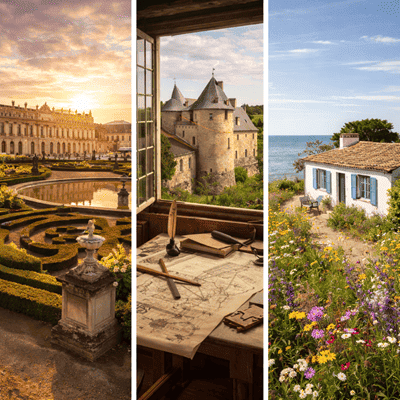
01. CHATEAU DE VERSAILLES
02. CHATEAU DE BAZOCHES
Dominating the village of Bazoches with its four round towers, this castle was the home of Marshal Vauban, the renowned military engineer of Louis XIV. It was here that he designed the plans for over 300 citadels and fortresses throughout France. The castle, built in the 12th century, was transformed by Vauban into a veritable design office, complete with a 30-meter-long gallery where his engineers and draftsmen worked. The interior has remained very personal: visitors can discover the Marshal's bedroom, his study, and numerous family mementos, as the castle is still inhabited by his descendants. The atmosphere is warmer and more studious than in the grand royal palaces. From the windows, the view of the Morvan hills and the Vézelay Basilica in the distance is absolutely breathtaking.
03. MAISON BONAPARTE
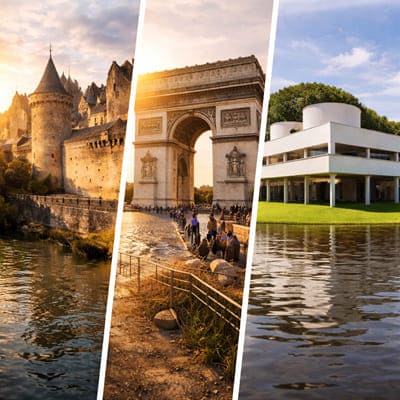
Nestled in the cobbled streets of Ajaccio's old town, the Maison Bonaparte (Casa Buonaparte) is the birthplace of a global legend. A listed historical monument, this patrician residence is where Napoleon I was born on August 15, 1769. Much more than a simple museum, this four-story family home reveals the private life of the Bonaparte family before their meteoric rise to power. Through period rooms, authentic furnishings, and personal belongings, visitors are immersed in the atmosphere of 18th-century Corsica and discover the roots of the man who would redraw the map of Europe.
Now part of the National Museum of the Châteaux of Malmaison and Bois-Préau, the Casa Buonaparte offers a rich museum experience, blending imperial memorabilia with art history. From the Emperor's birthplace to the galleries retracing the family's exile and triumphant return, each room resonates with the ambition of an extraordinary clan. A visit is essential to understanding Corsican identity and the remarkable destiny of a man who, from his native island, conquered the world.
04. MAISON DE CLEMENCEAU
Georges Clemenceau's House: The Tiger's Retreat Facing the Atlantic
It was on the Vendée coast, in Saint-Vincent-sur-Jard, that Georges Clemenceau chose to spend the last ten years of his life after retiring from politics in 1920. Far from the gilded halls of power, this simple fisherman's cottage, rented out year-round, reflects the asceticism and strength of character of the aging statesman. Facing the vastness of the ocean, "The Tiger" transformed this humble cottage into a place of reflection and writing, where he received his closest friends, including the painter Claude Monet. The house remains exactly as he left it upon his death in 1929: visitors can still see his spartan study, his bedroom opening onto the sea, and his collections of Far Eastern objects, all testaments to his insatiable intellectual curiosity.
The highlight of the visit is undoubtedly the "Impressionist" garden, created entirely by Clemenceau on the dune. Defying the sea spray and salt, he designed, with Monet's help, a lush green space where vibrant flowers thrive against the harsh marine climate. A stroll through this garden offers a glimpse into the private world of a man who, after leading France during the Great War, sought peace in the contemplation of the waves. Managed by the Centre des Monuments Nationaux (National Monuments Centre), this residence is a unique memorial site where French history intertwines with the wild beauty of the Vendée coastline.