01. CHATEAU DE VILLANDRY
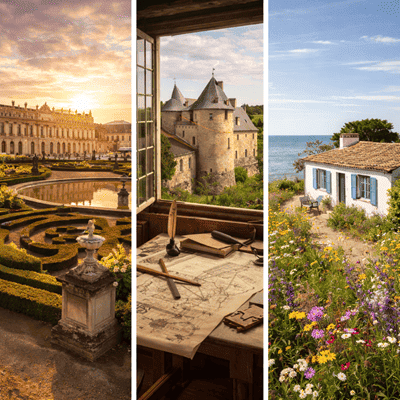
Villandry is located a few kilometers from Tours. It is one of the Loire Valley châteaux. Built in the Renaissance style, it owes its renown to its gardens, laid out on three terraces. The elegance of its architecture, combined with its remarkable gardens, has earned the château a place on the UNESCO World Heritage List. The gardens themselves are an indescribable splendor, blending beauty, harmony, diversity, and aesthetic appeal.
02. CHATEAU DE VERSAILLES
03. CHATEAU DE VAUX-LE-VICOMTE
04. CHATEAU CHENONCEAU
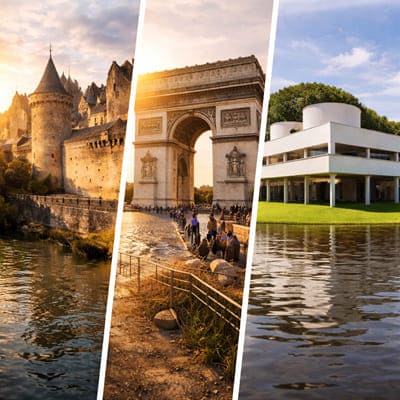
Chenonceau, with its famous two-story gallery overlooking the Cher River, is one of the jewels of Loire Valley architecture. Its Italian influences and French characteristics are clearly visible. Of the original building, only the Tour des Marques remains today, a vestige of the medieval castle that borders the Cher. Chenonceau was built, furnished, and transformed by women of very different temperaments. It was built by Katherine Briaçonnet in 1513, enriched by Diane de Poitiers, and enlarged under Catherine de Medici. It became a place of retreat under the White Queen Louise of Lorraine, then it was saved by Louise Dupin during the French Revolution, and finally, transformed by Madame Pelouze. Due to the large number of women who have been in charge of it, it is nicknamed "the Ladies' Castle." The private estate of Chenonceau has belonged to the Menier family since 1913 and is open to the public. The castle has been listed as a historical monument since its initial inscription on the list in 1840, and the park by decree dated November 7, 1962. The building and its surroundings have been part of the Loire Valley, a UNESCO World Heritage Site, since July 9, 2017.
05. DOMAINE DE CHAUMONT SUR LOIRE
One of the jewels of the Loire Valley, the Domaine de Chaumont-sur-Loire is distinguished by its unique identity, blending fairytale-like feudal architecture with a resolutely contemporary artistic program. Historically, the château is famous for having belonged to Catherine de Medici, who exchanged it for Chenonceau with her rival, Diane de Poitiers. Its architecture, marked by heavy circular towers and a drawbridge, retains the appearance of a medieval fortress, while having been extensively embellished during the Renaissance and then in the 19th century by the wealthy owners of the Broglie family. They also had luxurious stables built there, considered at the time to be the most modern in Europe, reflecting the splendor of aristocratic life before the First World War. From a tourism perspective, the estate is now a world-renowned destination thanks to its International Garden Festival, which takes place every year from April to November. This landscape laboratory allows designers from around the world to create ephemeral installations around an environmental or poetic theme, offering a constantly evolving experience within the historic park. In addition to its 32 hectares of greenery, the château houses spectacular contemporary art installations, integrated even into the attics and gardens. This bold blend of classical architectural heritage and avant-garde plant art makes Chaumont a unique destination, attracting history buffs as well as design and nature enthusiasts.
06. CHATEAU DE L ISLETTE
The Refuge of Famous Lovers Often compared to its neighbor Azay-le-Rideau for its Renaissance architecture and reflections in the water, the Château de l'Islette stands out with its much more romantic and intimate atmosphere. This white stone jewel, nestled in the arms of the Indre River, entered history as the setting for the passionate love affair between Camille Claudel and Auguste Rodin. It was in this bucolic setting that the two sculptors sought inspiration and tranquility, making the château a sanctuary of artistic creation and romantic love. Today, l'Islette remains a private residence, which lends a special warmth to the visit. One discovers tastefully decorated living spaces where period furniture sits alongside family heirlooms, giving the impression that the owners have just stepped out. The park, a veritable haven of greenery lulled by the murmur of the river, invites strolling and contemplation, offering a timeless interlude, far from the hustle and bustle of classic tourist circuits.