
Chateau du Haut-koenigsbourg
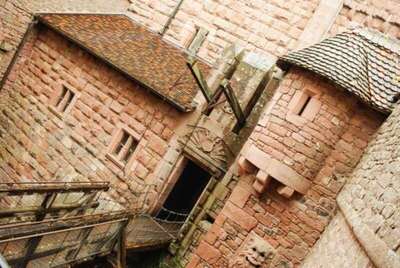
Chateau du Haut-koenigsbourg
2 Members like this place
About Chateau du Haut-koenigsbourg
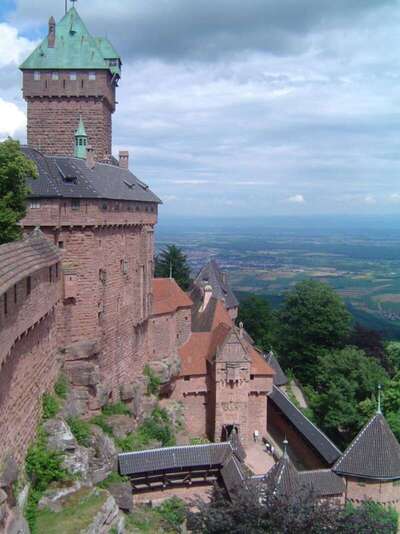
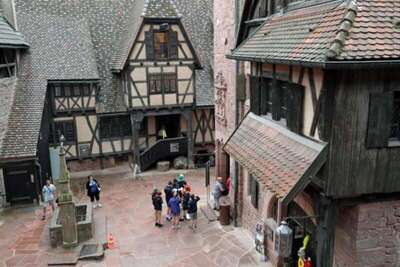
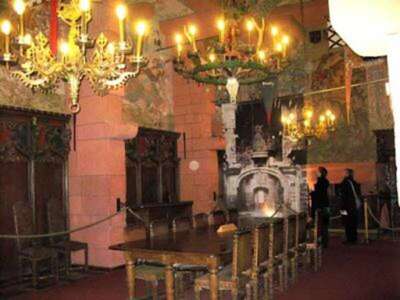
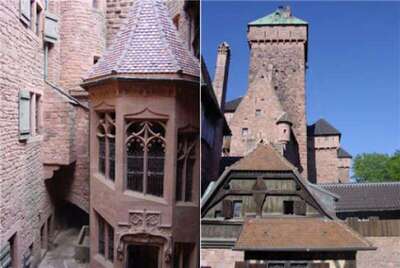
Add to favoritesHaut-Kœnigsbourg Castle is a 12th-century Alsatian fortress, extensively remodeled in the 15th century and restored before the First World War under William II. The castle stands in the French commune of Orschwiller in the Bas-Rhin department of the Grand Est region, within the historical and cultural region of Alsace. The castle's current name, Haut-Kœnigsbourg, is an adaptation of the German name Hochkönigsburg, which translates as "high castle of the king." Immerse yourself in the world of the Middle Ages. From the lower courtyard with its inn, forge, and mill, to the spiral staircases leading to the lord's furnished apartments, discover architecture, furnishings, and an atmosphere steeped in history.
Tip for an even more exceptional visit.
For a smart visit to Haut-Kœnigsbourg Castle, the key is to arrive right when it opens or two hours before closing to avoid the bottleneck effect on the narrow dungeon staircases. Once inside, don't just admire the frescoes in the Great Hall; look for details of the reconstruction commissioned by Emperor Wilhelm II in the early 20th century. It's this blend of medieval fortress and "imperial vision" that makes the place unique: spot, for example, the radiators hidden behind medieval paneling or the period electrical outlets integrated into the decor. The real secret to the view is not to stop at the first few windows. Climb up to the Great Bastion: it's the highest and most spectacular point, from where, on a clear day, you can see the Black Forest and even the Bernese Alps. For the perfect photo without the crowds, take the path around the outer ramparts; it offers breathtaking views of the pink sandstone walls and the Alsatian plain 700 meters below. Finally, always bring warm clothing: the castle, perched on its rocky spur, is a real wind tunnel, and the temperature drops drastically compared to the valley.
5 Key Dates
-
castle
1147
The first mention of the castle is recorded here. At that time, it was in the hands of the Hohenstaufen family and served to monitor Alsatian trade routes.
-
swords
1462
The destruction by the allied cities The castle, which had become a nest of "brigand knights", was besieged, taken and burned by a coalition of Alsatian and Swiss cities.
-
swords
1633
The Disaster of the Thirty Years' War: During the war, Swedish troops besieged the castle. After a month of resistance, it was captured, looted, and burned. It remained in ruins for over 250 years.
-
castle
1899
The gift from the city of Sélestat: While Alsace was under German rule, the city of Sélestat offered the ruins to Emperor Wilhelm II. He decided to rebuild them entirely to make them a symbol of imperial power.
-
castle
1919
The castle becomes French. After the First World War, the Treaty of Versailles awarded the castle to the French state as "Crown property".
The stories of your visits
Submit your review.mlegrand
2026-01-27"C'est LE château à faire en Alsace. La vue sur la plaine est juste incroyable, on en prend plein les yeux dès l'arrivée. L'intérieur est super bien restauré, on a vraiment l'impression que les chevaliers vont débarquer. C'est très impressionnant et bien conservé. Seul souci : c'est très touristique. Il y a beaucoup de monde dans les salles étroites et ça grimpe pas mal, donc prévoyez de bonnes baskets. Mais franchement, pour l'ambiance et le panorama, ça vau"
HOSTELLERIE LA CHENEAUDIERE ET SPA
Grand-Est
HOTEL LE CHATEAU FORT SEDAN
Grand-Est
CATHEDRALE DE STRASBOURG
Grand-Est
Check with the chateaux, restaurants and managers before any engagement.