

Key Dates
GENERAL DE GAULLE
""
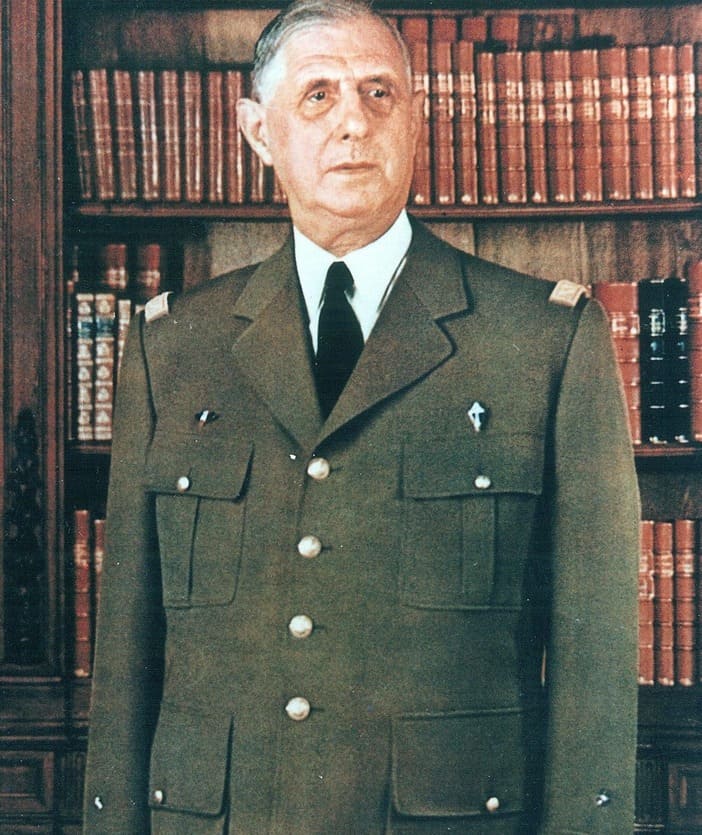
Charles de Gaulle (1890–1970) was a French military officer, resistance leader, and statesman, a central figure of the 20th century. Born into a Catholic and patriotic family, he trained at Saint-Cyr and participated in the First World War, where he was wounded and taken prisoner. He became known as a modern officer and military theorist, advocating mechanized warfare of movement. During the Second World War, after the defeat of 1940, he refused the armistice signed by Pétain's government and, from London, launched the Appeal of June 18, 1940, becoming the leader of Free France. He organized the external and internal resistance against the German occupation and played a decisive role in the liberation of France in 1944. After the war, he founded the Rally of the French People (RPF) and criticized the unstable governments of the Fourth Republic. In 1958, faced with the Algerian crisis, France recalled him to power: he became President of the Council, then founded the Fifth Republic, of which he became the first president. He established a strong presidential system and modernized the state. De Gaulle left a lasting mark on French history with his vision of an independent and sovereign France, notably through its autonomous foreign policy, its nuclear defense, and its withdrawal from NATO. He resigned in 1969 after losing a referendum and died in 1970, leaving behind an immense political and symbolic legacy.