
Key Dates
NAPOLEON
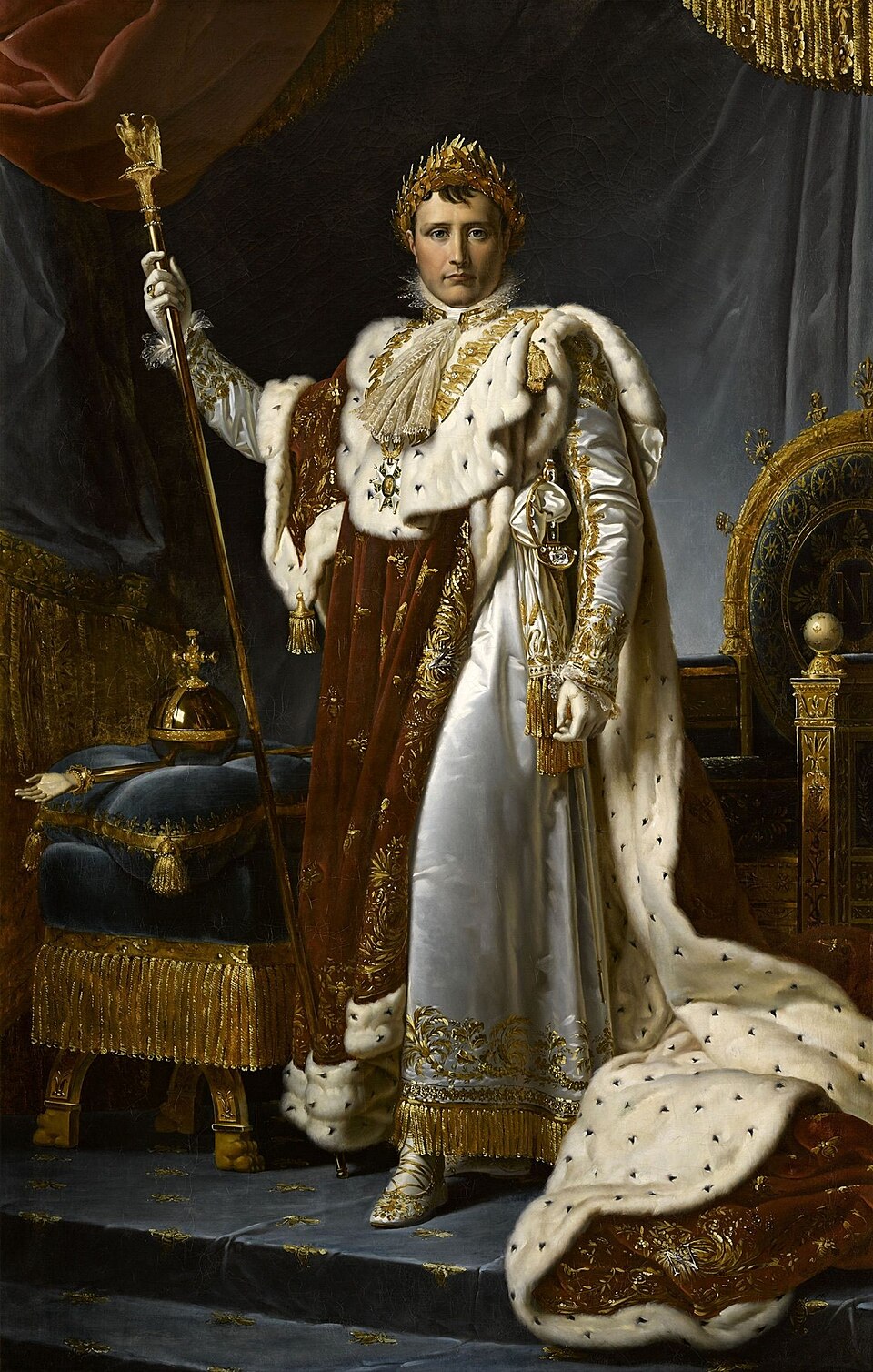
"Napoléon 1er"
The meteoric rise of a Corsican officer Born in Ajaccio in 1769, shortly after the annexation of Corsica by France, Napoleon Bonaparte came from a minor local noble family. Trained at the military schools of Brienne and then Paris, he distinguished himself by his tactical genius from the very beginning of the French Revolution. His decisive role during the siege of Toulon in 1793 earned him a rapid promotion, but it was above all the Italian campaign of 1796 that revealed his charisma and his communication skills. By transforming ragged troops into an army of conquerors, he established himself not only as an exceptional strategist, but also as an ambitious politician capable of dictating his terms to the defeated powers. The Transition from Order to Absolute Power Taking advantage of the Directory's instability, Napoleon seized power in the coup of 18 Brumaire (1799) and became First Consul. He then undertook a monumental stabilization effort to bring the Revolution to a close: he created the Bank of France, established the Civil Code to unify the laws, and founded the lycées to educate the elite. His ambition did not stop there; he had himself crowned Emperor of the French on December 2, 1804, under the name Napoleon I. This act symbolized his desire to establish a new dynasty, blending the revolutionary legacy with imperial pomp, while ensuring total control over the French administration and society. Europe Under the Boot of the Grande Armée The imperial reign was marked by a series of legendary military campaigns against European coalitions. From Austerlitz to Jena, the Grande Armée racked up victories, allowing Napoleon to dominate almost the entire continent and place members of his family on the thrones of Spain, Naples, and Westphalia. However, this hegemony clashed with the fierce resistance of England, which he attempted to strangle with the Continental System, and with the rise of European nationalism. The decisive turning point came in 1812 with the disastrous Russian campaign, where "General Winter" and the scorched earth policy decimated his troops, shattering the myth of his invincibility. The Farewell and the Legend of Saint Helena Weakened by betrayals and pressure from the Allied powers, Napoleon was forced to abdicate in 1814 and went into exile on the island of Elba. His audacious return during the Hundred Days ended in the final defeat at Waterloo in 1815. Deported by the British to the isolated island of Saint Helena, he spent his last years there dictating his memoirs, meticulously crafting his own legend for posterity. He died in 1821, leaving behind an immense and controversial legacy: that of a conquering tyrant for some, and a builder of modern France for others, whose institutions still structure the country today.