
Key Dates
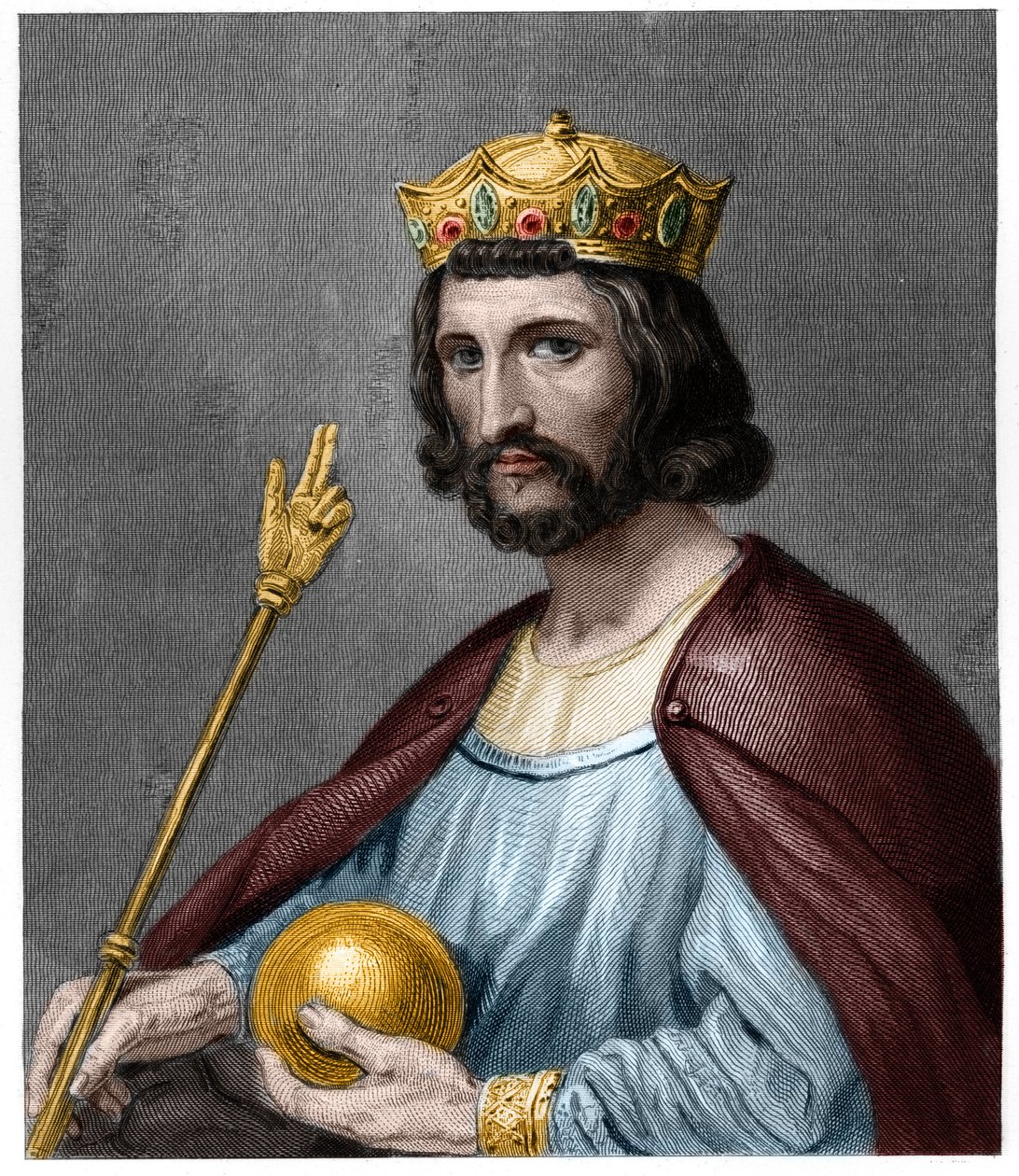
HUGUES CAPET
""
Heir to a Line of "Shadow Kings" Born around 940, Hugh Capet was the son of Hugh the Great, the most powerful man in the Kingdom of France after the king. A member of the Robertian family, he inherited the title of "Duke of the Franks," making him the foremost of the kingdom's great lords. At that time, the Carolingian dynasty (descendants of Charlemagne) was in decline, weakened by Viking invasions and internal strife. Hugh, although a vassal in name only, possessed strategic lands between the Seine and the Loire rivers and wielded political influence that often surpassed that of the reigning monarch, Louis V. The Election of 987: A Historical Turning Point In 987, the accidental death of the young King Louis V, who left no heir, created a legal vacuum. Thanks to the decisive support of the Church, and in particular of Adalberon, Archbishop of Reims, Hugh Capet was elected king by an assembly of powerful lords in Senlis. He was crowned in Noyon or Reims in July 987. This election marked the definitive end of the Carolingian era and the beginning of the Capetian dynasty. However, his real power remained limited: he reigned directly only over the "royal domain," a small territory around Paris and Orléans, while the great dukes and counts (Burgundy, Normandy, Aquitaine) were virtually independent in their own lands. The Strategy of Hereditary Succession Hugh Capet's greatest achievement was not the extent of his conquests, but the perpetuation of his crown. Aware of the precariousness of his position as the elected king, he had his eldest son, Robert the Pious, crowned at the end of 987. This stratagem, known as association with the throne, avoided a new election upon his death and reinforced the idea that the crown should remain within the same family. This tradition of "coronation during the father's lifetime" would be maintained by his successors for two centuries, firmly establishing the principle of hereditary succession in the French monarchy. A reign of stabilization Hugh Capet spent most of his reign defending his title against the last Carolingian claims (notably those of Charles of Lorraine) and maintaining the balance between the great feudal lords. Relying on the Church to legitimize his authority, he laid the foundations of the modern state by making Paris his principal residence. At his death in 996, he left behind a kingdom that was certainly fragmented, but a firmly established dynasty. The Capetians, through the Valois and then Bourbon branches, reigned over France without interruption (except for revolutionary periods) until 1848.