
Key Dates
LOUIX XIV
"Le roi Soleil"
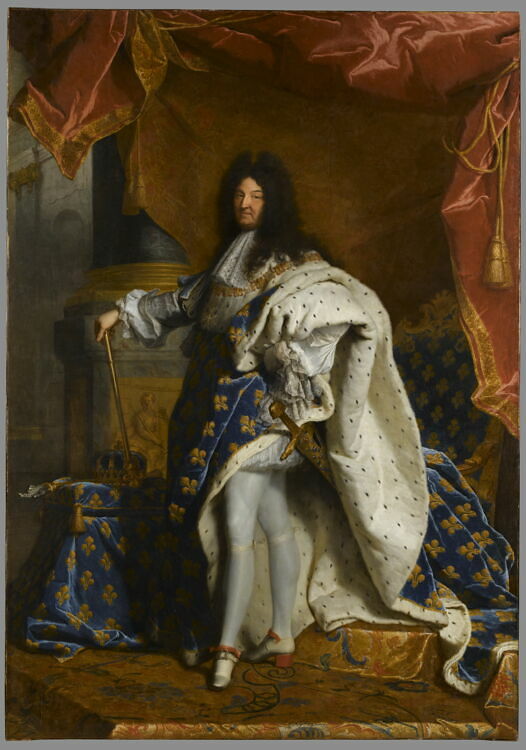
This is a biography of Louis XIV, the "Sun King," whose 72-year reign remains the longest and one of the most significant in French history. A Childhood Forged by Rebellion Born in 1638, Louis XIV ascended the throne at the age of five under the regency of his mother, Anne of Austria, and Cardinal Mazarin. His youth was marked by the Fronde, a series of violent revolts by the nobility and the people of Paris. Forced to flee Paris several times, the young king suffered a profound trauma and a lasting distrust of the capital and its powerful lords. This experience forged his determination to centralize power and ensure that his authority would never again be challenged. The Embodiment of Absolute Monarchy Upon Mazarin's death in 1661, Louis XIV decided, to everyone's surprise, to rule alone, without a prime minister. He established an absolute monarchy by divine right, considering himself God's representative on earth. Choosing the Sun as his emblem, he organized the state around himself. Aided by devoted ministers like Colbert for the economy and the navy, he modernized the administration, developed manufacturing, and imposed strict religious unity, notably through the revocation of the Edict of Nantes in 1685. Versailles: The Theater of Grandeur To subdue the nobility, Louis XIV transformed his father's hunting lodge at Versailles into a monumental palace, the largest in Europe. He established the Court there in 1682, transforming the lords into courtiers bound by rigid etiquette. Versailles became the cultural center of the world: the king protected artists such as Molière, Racine, Lully, and Le Nôtre. Through this constant display of grandeur, he made France the epitome of classicism and European elegance. Wars, Glory, and the End of a Reign Passionate about military glory, Louis XIV spent much of his reign at war (the Franco-Dutch War, the War of the League of Augsburg, and the War of the Spanish Succession) to expand the kingdom's borders and secure France against the Habsburgs. While these conquests enlarged the country, they ultimately depleted the royal treasury. His reign ended in hardship, marked by famines and family tragedies. He died in 1715, leaving behind a powerful and centralized, but financially exhausted, state to his great-grandson, Louis XV.