
Key Dates
RICHELIEU
"Cardinal de"
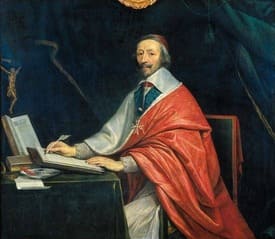
Armand Jean du Plessis, Cardinal Richelieu (1585–1642), was a French prelate and statesman, a major figure during the reign of Louis XIII. Born into a noble family, he was ordained a priest in 1607 and entered political life, holding several ecclesiastical and administrative positions. He became Bishop of Luçon in 1607 and quickly rose to prominence in the corridors of power thanks to his intelligence and mastery of political alliances. In 1624, Richelieu was appointed Prime Minister to Louis XIII, a position he held until his death. His policies aimed primarily to strengthen royal authority and centralize power, limiting the influence of the great lords and noble factions that could threaten the king. He reformed the administration and the justice system to increase the efficiency of the state and extended oversight to the provinces. Richelieu also played a decisive role in international affairs. He supported the German Protestants during the Thirty Years' War and fought against Habsburg power in Europe, thus consolidating France's position as a great power. His diplomacy and military strategy helped pave the way for France's rise to prominence under Louis XIV. Beyond his political activities, Richelieu was a patron of the arts and literature. He founded the Académie Française in 1635, an institution dedicated to the French language and culture, and supported numerous artists and writers. His influence on 17th-century France was profound, and he remains an emblematic figure of the modern centralized state.