
Key Dates
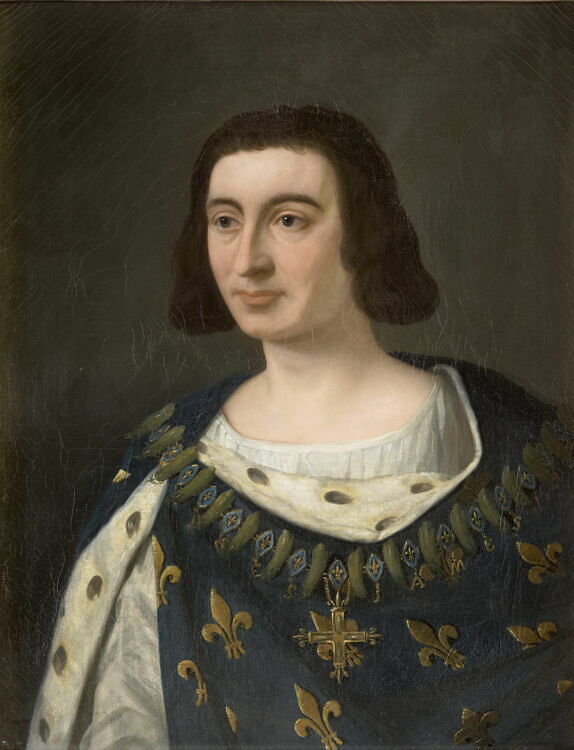
LOUIS IX
"Saint-Louis"
A Childhood Marked by the Fronde Born in 1638 after a twenty-three-year wait by his parents, Louis XIII and Anne of Austria, Louis-Dieudonné was seen as a gift from heaven. Becoming king at the age of five, he grew up under the regency of his mother and the influence of Cardinal Mazarin, his political mentor. His youth was profoundly marked by the Fronde, a series of revolts by the nobility and the Parisian people that forced the royal family to flee the capital. This childhood trauma forged his absolute determination: he would never again allow the nobility to challenge royal authority and would harbor a lasting distrust of Paris. The Rise of Absolutism Upon Mazarin's death in 1661, Louis XIV surprised the court by announcing that he would henceforth rule alone, without a Prime Minister. This marked the beginning of the absolute monarchy by divine right, where the king considered himself God's lieutenant on earth. Choosing the Sun as his emblem, he centralized all power in his own hands, surrounding himself with devoted and talented ministers such as Colbert for finance and Louvois for war. He established a rigorous administration, stimulated the economy through mercantilism, and imposed strict religious unity, even revoking the Edict of Nantes in 1685, which led to the exile of many Protestants. Versailles, the Theater of Power To consolidate his rule and tame the high nobility, Louis XIV transformed a modest hunting lodge at Versailles into the largest palace in Europe. He installed his court there in 1682, transforming the formerly rebellious lords into assiduous courtiers, dependent on his favor to maintain their rank. Versailles became the cultural center of the world, where the king protected artists such as Molière, Racine, and Lully. Through grandiose celebrations, rigid etiquette, and classical architecture, he staged his own glory, making France the undisputed cultural and artistic model of the 17th century. A Military Influence and the End of a Reign Louis XIV's reign was also one of constant territorial expansion. Passionate about military glory, he waged numerous wars (the Franco-Dutch War, the War of the League of Augsburg, and the War of the Spanish Succession) to expand the kingdom's borders and break the Habsburg encirclement. While these conquests endowed France with new provinces and a ring of citadels fortified by Vauban, they also depleted the country's finances. The end of his reign was overshadowed by famines, crushing taxes, and successive family tragedies. He died in 1715, leaving his great-grandson, Louis XV, a powerful but financially fragile kingdom.