
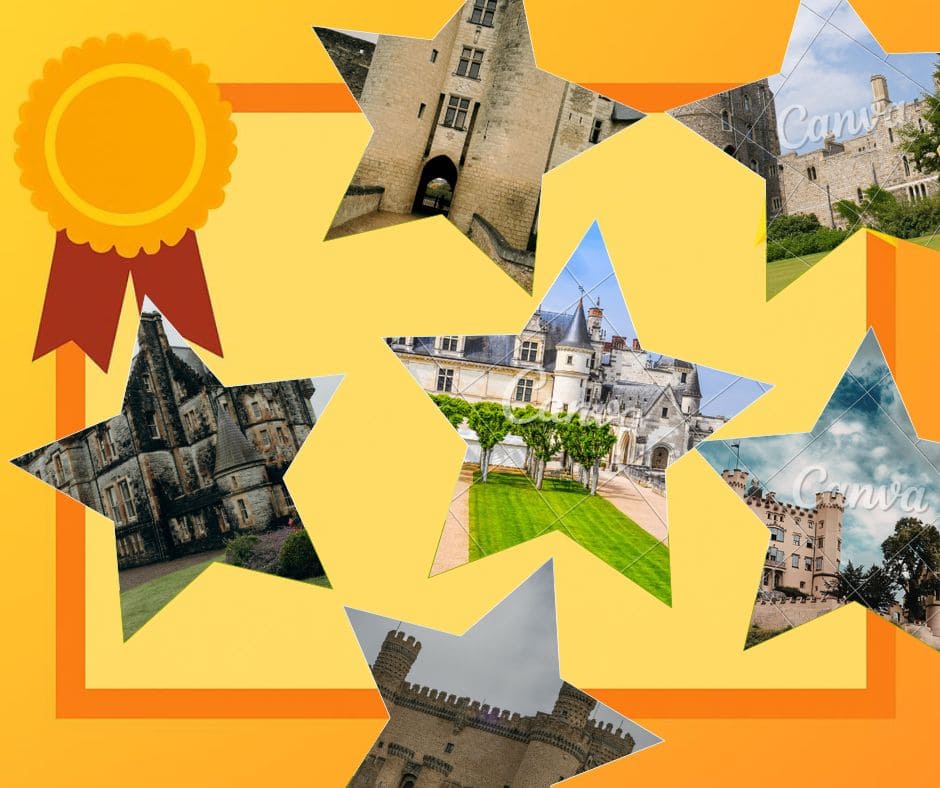
A Tour de France of Castles: Hidden Gems by Region
Traveling through France is an immersion in a mosaic of architectural styles, where each region proudly defends its identity. While the Loire Valley is the cradle of the Renaissance, other lands conceal equally majestic gems, from the pink sandstone of Alsace to the vertiginous citadels of the South. For a regal stopover in the Île-de-France region, the Château de Chantilly dazzles with its art collections, while in Occitanie, the Château de Peyrepertuse defies gravity on its rocky spur. To the east, the Château du Haut-Kœnigsbourg dominates the Alsatian plain with its imperial silhouette, complemented to the west by the Château des Ducs de Bretagne in Nantes, a veritable fortified palace. Finally, the Château de Grignan, in the Drôme Provençale, reminds us that the elegance of the Marquise de Sévigné found one of its most beautiful settings in the Southeast.
A Tour de France of Castles: Unmissable gems by region arrow_forwardDream Gardens: The finest green spaces and exceptional parks
The art of the château doesn't end at its stone walls; it extends into gardens where nature, tamed by human ingenuity, becomes a work of art in its own right. From Le Nôtre's endless vistas to the intricate boxwood parterres, these parks are essential destinations for any lover of botany and aesthetics. The Château de Villandry remains the absolute benchmark with its unique decorative kitchen garden, closely followed by the Château de Vaux-le-Vicomte, whose gardens served as the architectural model for Versailles. In the Dordogne, the Château d'Eyrignac elevates the art of topiary with its plant sculptures, while the Château de Courances offers a breathtakingly serene aquatic spectacle. For a more romantic touch, the Château d'Ainay-le-Vieil protects, behind its ramparts, some of the most renowned old rose gardens in France.
Dream Gardens: The finest green spaces and exceptional parks arrow_forwardThe Stone Giants: Ranking of the largest estates in France
Extravagance has always been the language of kings and the powerful to assert their authority throughout the centuries. Visiting these stone colossi, one is overwhelmed by staggering figures: hundreds of rooms, kilometers of ramparts, and vast forest estates as large as capital cities. The Château de Chambord embodies this megalomania with its double-helix staircase and 426 rooms, rivaling the Palace of Versailles, a global symbol of Louis XIV's influence. The Château de Fontainebleau, with its 1,500 rooms inhabited by sovereigns over eight centuries, completes this imperial trio. Further east, the Château de Valençay boasts an immense estate of royal proportions, while the Château de Compiègne stands out as one of the three largest royal and imperial residences, a testament to the splendor of Napoleon III.
The Stone Giants: Ranking of the largest estates in France arrow_forwardImpregnable Fortresses: The Most Beautiful Medieval Castles
The Middle Ages bequeathed to us stone sentinels built to withstand the fiercest sieges, true witnesses to France's military history. These fortresses, with their drawbridges, machicolations, and massive keeps, still fascinate today with their raw power and defensive ingenuity. The Cité de Carcassonne remains the most spectacular example of a fortified city in Europe, while the Château de Castelnaud in the Dordogne plunges us into the heart of the Hundred Years' War. More secluded but just as impressive, the Château de Bonaguil represents the pinnacle of military architecture before the age of artillery. To the north, the Château de Pierrefonds offers an idealized vision of the Middle Ages reinvented by Viollet-le-Duc, while the ruins of Château-Gaillard in Normandy recall the ferocity of Richard the Lionheart in his confrontation with the King of France.
Impregnable Fortresses: The Most Beautiful Medieval Castles arrow_forwardUnusual Castles: Records of originality and atypical architecture
Beyond classical styles, some builders gave free rein to their imagination to create buildings unlike any other, defying conventions and eras. These unusual castles captivate with their audacity, whether carved from rock or born of a solitary dream. The Palais Idéal of Ferdinand Cheval is undoubtedly the most famous of these architectural marvels, built stone by stone by a single man. In a different style, the Château de Brézé surprises with its immense troglodytic underground fortress, the largest in Europe. The Basque Country is home to the Château d'Abbadia, a neo-Gothic residence with oriental and scientific influences, while the Château de la Rochepot in Burgundy dazzles with its multicolored glazed tile roofs. Finally, the Château d'Ussé, with its multiple towers and turrets, seems straight out of a fairytale, having even inspired the story of Sleeping Beauty.
Unusual Castles: Records of originality and atypical architecture arrow_forward